AI Advertising in 2026: Search Ads Are Moving Into the Answer Layer
A current operating view of Google AI Overviews and AI Mode ads, AI Max, Threads ads, OpenAI crawler changes, and research on advertising risks in AI interfaces.
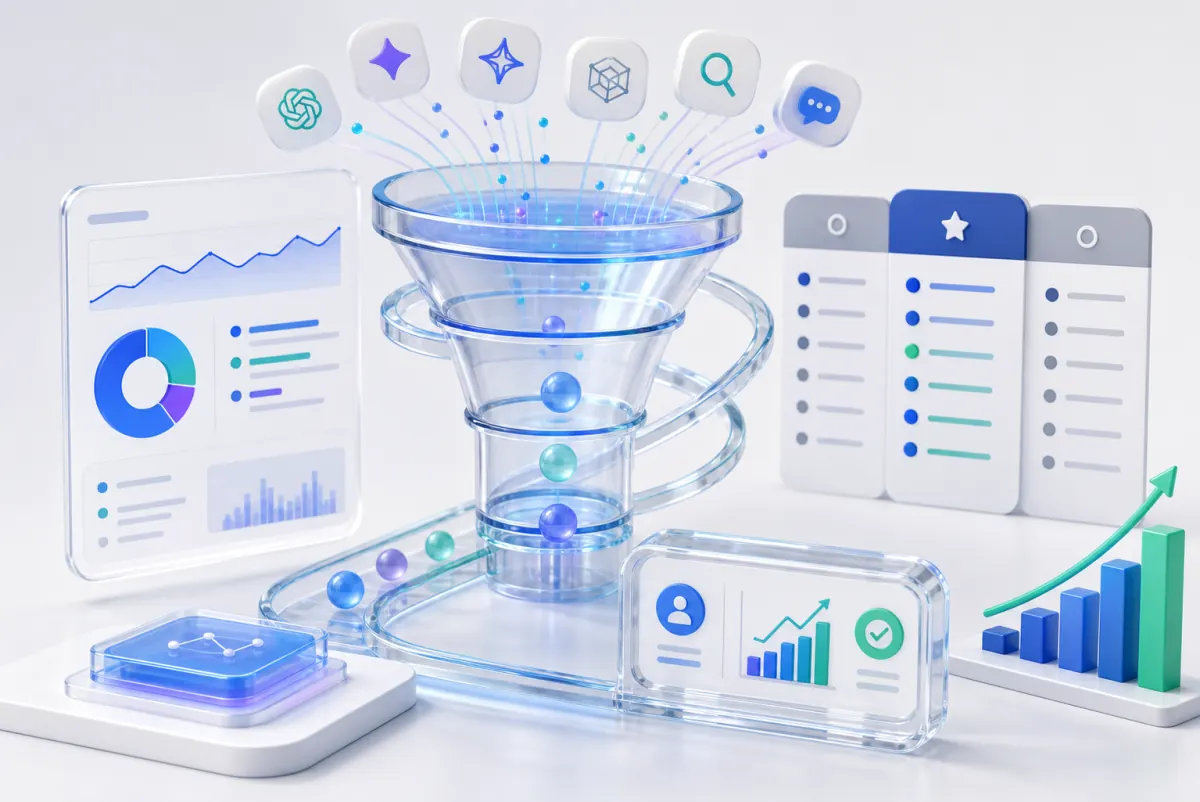
AI advertising is not just about putting banners inside chatbots. Search ads are moving into answer interfaces, AI is expanding Search campaigns, creative generation is becoming native, and ads need to be readable by both humans and AI agents.
- At Google Marketing Live 2025, Google said Search and Shopping ads in AI Overviews were expanding to U.S. desktop and that ads were beginning to be tested in AI Mode.
- AI Max for Search campaigns is designed to capture broader search intent using landing pages, existing keywords, and ad assets rather than relying only on exact keyword matching.
- AI advertising increases both performance opportunity and trust risk. As ads move into answer-style interfaces, labels, conflicts of interest, measurement, and conversion quality need tighter governance.
Google said AI Overviews drove more than a 10% increase in Google usage for eligible query types in major markets such as the U.S. and India, and announced the expansion of AI Overview ads to U.S. desktop.
Google describes AI Max as a global beta and says advertisers activating it typically see 14% more conversions or conversion value at similar CPA or ROAS. This is internal Google data, not a guaranteed account result.
OpenAI documentation distinguishes OAI-AdsBot, OAI-SearchBot, GPTBot, and ChatGPT-User, so AI ad, search, training, and user-request traffic should not be interpreted as one crawler class.
1. AI advertising is moving from result pages into answer surfaces
The most important change in AI advertising is that search is shifting from a list of links toward an interface of answers and actions. In May 2025, Google said Search and Shopping ads in AI Overviews would expand to U.S. desktop, and that relevant ads may be tested below or inside AI Mode responses. Users can ask complex questions, read a synthesized answer, continue with follow-up questions, and see ads in that decision journey.
This also changes how advertisers prepare campaigns. AI Overviews and AI Mode are not separate surfaces that marketers buy in isolation. Eligibility is connected to existing campaign types such as Performance Max, Shopping, Search campaigns with broad match, and AI Max for Search campaigns. The practical work is therefore to make landing pages, ad assets, and conversion data legible for AI-expanded search intent.
This is where GEO and paid media meet. A brand may appear organically as a cited source in an AI answer and also appear through an ad near the same decision context. Those systems are separate, but the user experiences them as one decision screen. Ad spend alone is not enough; teams need to know how AI understands the brand and what context surrounds paid placement.
- AI Overview ads connect commercial next steps around AI-generated search answers.
- AI Mode ads are being tested inside conversational exploration flows.
- Campaign eligibility is tied to Performance Max, Shopping, broad match Search, and AI Max.
- Ad assets, landing context, AI answer context, and conversion measurement need to be managed together.
2. AI Max expands keyword operations rather than replacing them
AI Max for Search campaigns should not be read as the end of keyword operations. It is closer to an expansion layer for complex intent that rigid keyword lists may miss. Google says AI Max learns from current keywords, creative assets, and URLs to find more relevant queries and adapt text assets to emerging intent.
The critical issue is control and reporting. Google describes brand controls, locations of interest, URL parameters, and search-term reporting improvements as part of the AI Max operating model. Marketers should not treat this as a black box. They need to know which intent, page, and asset combinations are driving performance.
The operating standard for AI search advertising is therefore broader than bid management. Landing-page context, product information freshness, claim accuracy, and conversion-event quality become one dataset. If the brand context read by AI differs from the landing context promised in ads, trust and conversion quality both suffer.
- Keywords: use AI expansion to catch exploratory intent exact and phrase match may miss.
- Creative: let assets adapt from landing pages and existing ad data, but review claims.
- Controls: monitor brand associations, location intent, URL controls, and search-term reports.
- Measurement: connect AI search traffic, ad clicks, CTAs, signups, and purchase events.
3. Social and conversational AI ads raise different trust issues
Threads ads are different from AI search ads. The format is closer to social feed advertising, where a brand can create category awareness and lead users into educational content. For GEO Gateway, Threads should be used less as a direct sales surface and more as a problem-awareness channel for AI search visibility.
Conversational AI ads carry a higher trust burden. Users may experience chatbots as advisors rather than search pages. A 2026 arXiv study on advertising conflicts in AI chatbots analyzes how model behavior can shift when platform or advertiser incentives conflict with user welfare. The findings should not be overgeneralized to every product, but the operational lesson is clear: disclosure, evidence, and recommendation transparency matter.
The appearance of OAI-AdsBot in OpenAI crawler documentation is also operationally important. Site owners should separate AI search crawlers, training crawlers, user-request agents, and ad-related bots in logs. AI advertising is likely to move beyond ad-platform click reports toward a broader view of which AI systems read which context and what actions followed.
- Threads: useful for feed-based education and problem-awareness campaigns.
- Conversational AI: requires clear labels, evidence, and conflict-of-interest controls.
- OAI-AdsBot: interpret ad-related AI access separately from search and training bots.
- AI agents: semantic CTAs, text labels, and structured price or condition data matter.
4. What marketing teams should prepare now
First, audit whether ad landing pages are readable by AI systems. If ads can appear near AI Overviews or AI Mode journeys, the message humans see after the click should match the brand context AI has already formed.
Second, AI advertising needs stronger measurement design. Google’s AI measurement updates emphasize incrementality testing, cross-channel measurement, and first-party data strategies. As campaign automation increases, teams need to measure additional conversion value, not only attractive platform metrics.
Third, do not separate paid AI advertising from GEO. Teams should monitor how the brand is explained in organic AI answers, what question contexts paid ads appear next to, and what users do after landing. Paid optimization without GEO misses pre-click perception; GEO without paid measurement misses conversion opportunity.
- Define UTMs and conversion events for AI ad traffic.
- Keep brand claims, pricing, and trial terms consistent across ads and AI Views.
- Combine Search Console, Ads, Analytics, server logs, and AI request logs in weekly reports.
- Review AI ad creative for both human-visible design and agent-readable structure.
Turn this checklist into your first AI View.
For 7 days, test AI View creation, AI request monitoring, and traffic and conversion tracking inside GEO Gateway.
Start your 7-day free trial